You Own Fourteen Blushes and Your Cheeks Have Two Sides: A Support Group in Article Form
Hello. My name is BeautyFool, and I have a blush problem.
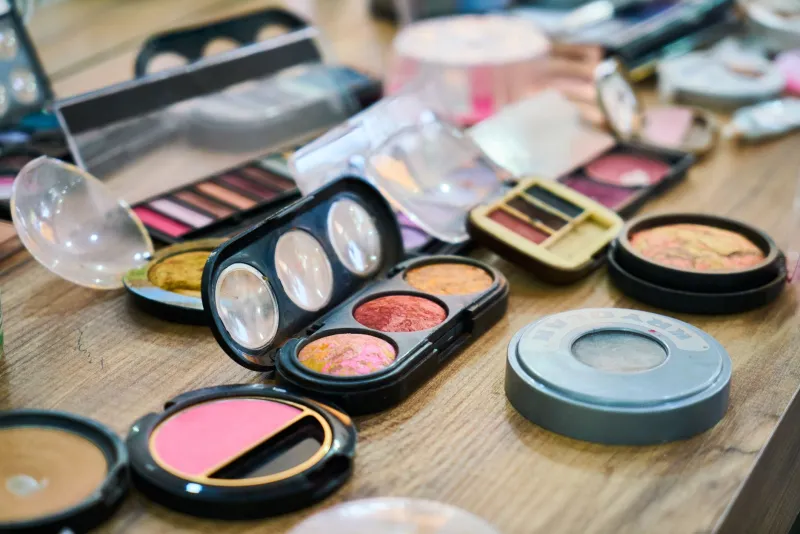
Not a redness problem, though that's a separate article. A collection problem. A 'I genuinely cannot account for how many pink powders live in my bathroom' problem. A 'I opened a drawer last Tuesday and found a blush I have no memory of purchasing, still in its cellophane, looking at me with the wounded eyes of a rescue animal' problem.
I am not alone. You are not alone. And the beauty industry has been engineering this outcome for years with the precision of a Swiss watch and the ethics of a carnival game.
First, Let's Establish the Scope of the Damage
We surveyed a completely unscientific but spiritually representative group of beauty enthusiasts — friends, followers, the woman in our office who has been described as 'the one with the makeup thing' — and asked them one simple question: how many blushes do you currently own?
The answers ranged from 'six, I think?' (she owned eleven) to 'oh, maybe twenty?' (she owned twenty-six). Not a single respondent accurately estimated their blush inventory. Every single person underestimated, some by a factor of two. This is not a coincidence. This is dissociation as a coping mechanism, and it is completely understandable given the circumstances.
For context: you have two cheeks. You can only wear one blush at a time. Even if you're doing a blended multi-blush look — a technique that has been trending approximately three times in the last four years, each time as though it's a brand new idea — you're using maybe three products. Out of twenty-six. The math is not mathing.
The Taxonomy of Blushes You Actually Own
Let us be honest with ourselves, together, in a safe space. Here is a completely accurate breakdown of what lives in the average beauty enthusiast's blush drawer:
The Everyday Blush — One compact, usually medium-coral or soft rose, slightly depressed in the center from regular use, the only blush you actually reach for. This is your blush. Everything else is aspiration.
The 'Vacation' Blush — A bronzy, terracotta situation you bought before a trip to somewhere warm, used once on the plane, and have not touched since. It lives in your drawer as a monument to who you thought you'd become.
The Limited Edition That Started This Whole Thing — A collaboration between a brand and someone famous, in packaging so beautiful you genuinely cannot bring yourself to use it. The pan is untouched. The box is pristine. You are its curator, not its owner.
The Drugstore Backup — Purchased during a period of fiscal responsibility. Completely serviceable. Ignored because it doesn't spark joy the way the $48 version does, which is insane but also deeply human.
The 'I Thought It Was More Pink' — A blush that looked one color in the pan, another color on the swatch, and a third, unexpected color on your actual face. You've tried to make it work four times. You will try a fifth time. It will still be wrong.
The Blush Someone Gifted You — Technically free, which means you feel obligated to keep it forever even though the shade is aggressively wrong for your coloring. It sits in the drawer radiating guilt.
The Viral One — You bought it because every person on the internet told you it would change your life. It did not change your life. It is a nice blush. You already had a nice blush. You now have two nice blushes.
The Ones You've Forgotten — At least three. Possibly five. You'll find them when you move.
How the Industry Manufactured the Need
Blush is, objectively, a category where one good product should last you years and satisfy every reasonable cheek-related need you have. The beauty industry identified this problem early and responded with the creativity of a team that gets paid by the SKU.
The first move was shade proliferation. Instead of 'pink,' you now have dusty rose, sheer berry, warm peach, nude peach, peachy coral, coral-pink, rose-gold, bronze-rose, and 'your lips but better' (which is still technically a blush). Each of these is meaningfully different enough to justify its own SKU, similar enough that you'll buy three before realizing you've assembled a family of near-identical siblings.
The second move was formula fragmentation. Powder blush wasn't enough. Then came cream blush, liquid blush, blush balm, blush stick, blush serum (yes, really), and the increasingly unhinged category of 'blush gloss,' which is a product that exists in the year we are currently living in. Each formula is sold as categorically different from the others, requiring its own spot in your collection. You don't have too many blushes. You have one of each type. Completely different thing.
The third and most devastating move was the limited edition drop. A blush that only exists for one season, in packaging designed by someone whose aesthetic you love, in a shade that's described as 'a sunset over the Pacific' or 'the feeling of falling in love in autumn.' It will sell out. The countdown clock on the website is real. Your desire to own this specific compressed pink powder before it disappears forever is also, unfortunately, real.
This is not an accident. Scarcity is a formula, and the beauty industry has been running this calculation since before most of us were born.
The Sunk Cost Blush
Here's the cruelest part of the blush multiplication effect: once you own a dozen blushes, the psychological pressure to use them all creates a kind of paralysis. You open the drawer, you see the options, you feel vaguely guilty about the ones you haven't touched, and you reach for your everyday blush anyway — the one you would have reached for if you owned only one. The collection doesn't improve your routine. It just makes the drawer heavier and the decision harder.
Beauty brands know this. They also know that the guilt of an unused collection doesn't stop you from buying more. If anything, it makes you slightly more likely to buy the next drop, because maybe that one will be the one you actually use. Maybe that shade is the missing piece. Maybe this time.
This is the blush trap. It is sprung with powder and packaged in rose-gold.
The Way Out (Sort Of)
We're not going to tell you to stop buying blush. We're a beauty site. We would be hypocrites. Also, some of you have already clicked the link to the new drop while reading this article, and we respect the commitment.
But here's a genuinely useful reframe: before you buy the next one, pick up your everyday blush — the one you actually use — and look at how much product is left. If the pan is less than halfway gone, you do not need a new blush. You need to finish your blush. The new one will still exist when you get there. Or it won't, and you'll find something else you love. Either way, your cheeks will be fine.
They've always been fine. That's the thing nobody in the blush aisle wants you to realize.