Yesterday's Glow-Up Is Today's Glow-Down: The Endless Cruelty of Beauty's Moving Goalposts
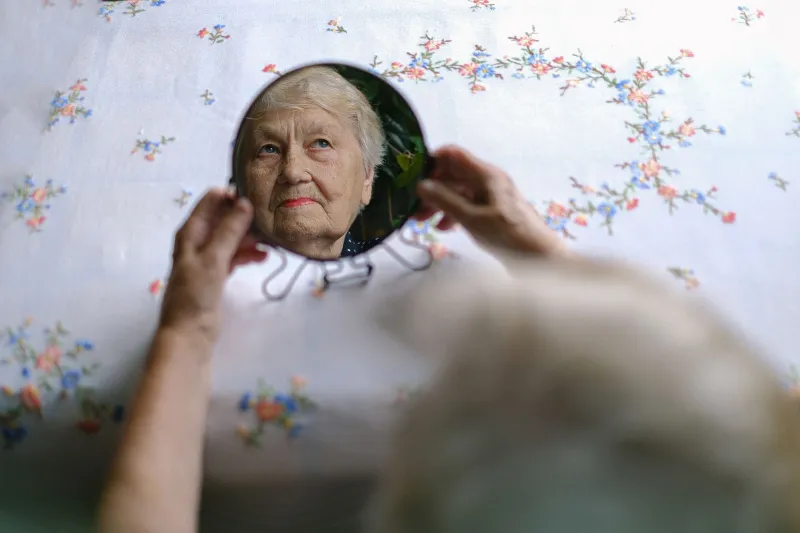
Somewhere right now, there is a woman looking at a photo of herself from 2019 and cringing. The Instagram brows. The blinding highlight. The contour that could be seen from low Earth orbit. She looks confident in the photo — maybe even proud — but the internet has since informed her, through a thousand subtle and not-so-subtle TikTok videos, that she looks unhinged.
Welcome to the Glow-Up Industrial Complex, where the finish line moves every eighteen months and the entry fee is your entire personality.
What Even Is a 'Glow-Up,' Legally Speaking?
The term started innocently enough — a genuine transformation, the kind your high school reunion was theoretically built around. But somewhere between 2016 and now, it mutated into something far more sinister: a rolling standard of acceptability that requires perpetual maintenance, perpetual spending, and perpetual awareness that you are, at any given moment, probably doing something wrong with your face.
The glow-up is no longer a destination. It's a subscription service you never agreed to.
Dr. Priya Mehta, a licensed psychologist who works with clients experiencing body image anxiety in New York City, puts it plainly: "The problem isn't that beauty trends change — they always have. The problem is the speed and the tone. Social media doesn't just say 'here's something new.' It says 'here's something new, and the fact that you didn't already know about it says something unflattering about you.'" That's a meaningful distinction, and it explains why so many people describe scrolling through beauty content as simultaneously exciting and quietly devastating.
The Trend Lifecycle Has Gone Completely Feral
Let's do a quick timeline exercise, because the math here is genuinely alarming.
In 2016, the goal was a full glam beat — cut crease, baked concealer, overlined lips, brows so defined they could file taxes independently. By 2019, that look was already being quietly retired in favor of "no-makeup makeup" — the aesthetic that requires approximately fourteen products to appear as though you used zero. Then came the "clean girl" era of 2022, which was essentially the same thing but with slicked-back hair and a $68 tinted moisturizer. Now we're somewhere in the vicinity of "expensive minimalism" and "your skin but elevated," which is, again, the same thing repackaged with new vocabulary and a fresh round of product recommendations.
Each of these eras was presented as a correction — a return to something more natural, more authentic, more you. Each of them still required buying a lot of stuff.
Dermatologist Dr. Sandra Okafor, based in Chicago, has watched this cycle chew through her patients' routines with impressive efficiency. "Every couple of years I see people coming in wanting to undo something the previous trend told them to do," she says. "Overplucked brows, aggressive chemical peels for a 'glass skin' effect that stripped their barrier, filler placed in ways that are now considered passé. The trend moves on. The face doesn't always move with it."
The Algorithm Is Running Point on Your Self-Esteem
Here's the part where we have to talk about TikTok, because we always have to talk about TikTok.
The platform's recommendation engine is, among other things, a remarkably efficient delivery system for beauty anxiety. You watch one video about "soft glam" and within 48 hours your For You Page has quietly assembled a curriculum on everything you are currently doing wrong: your skincare layering order, your blush placement, the specific brand of SPF that apparently marks you as either enlightened or tragically behind, depending on which creator you ask first.
What makes this particularly effective as a psychological mechanism is that the content doesn't frame itself as criticism. It frames itself as education. You're not being told you look bad — you're being informed that you could look better. It's the beauty equivalent of being told your apartment is fine, but have you considered that it could be so much more with just a few changes? Thousands of dollars of changes? Starting immediately?
Melanie Torres, a 31-year-old marketing coordinator in Austin, describes falling into this loop with the resigned clarity of someone who has done the math. "I spent probably two years really into the whole 'glass skin' thing. Layering essences, double cleansing, the whole routine. Then I started seeing all these videos about how multi-step routines are actually damaging your skin barrier and 'skin cycling' is the right approach now. So I threw out half my products and started over. And now I'm seeing content about how skin cycling is overcomplicated and you should just use three products." She pauses. "I think I've spent close to $800 reacting to trend shifts in the past eighteen months."
The Cringe Economy
There is a specific and particularly cruel content genre that deserves its own paragraph: the "cringe compilation." You know the ones. Old tutorials, old looks, old influencer videos — all presented with the implicit or explicit message that the people in them are laughable. That you are laughable, if you ever looked like that.
This content performs extremely well, which tells you something uncomfortable about how beauty culture processes its own history. Rather than treating past trends as, you know, trends — temporary expressions of a cultural moment — it treats them as evidence of bad judgment. The person who was doing their best with the information and aesthetics available to them in 2017 is now a punchline.
The practical effect of this is that people learn, very quickly, that the cost of getting it wrong isn't just looking dated. It's looking stupid. And that fear — the fear of being the person in the future cringe compilation — is an extraordinarily powerful motivator to keep buying, keep updating, keep chasing.
Getting Off the Treadmill (Or At Least Slowing Down)
Dr. Mehta suggests something that sounds simple and is actually quite difficult: developing what she calls a "trend audit" habit. "Before you buy into a new look or a new product, ask yourself: am I excited about this because it genuinely appeals to me, or because I've been shown seventeen videos implying I should be?" The answer, she acknowledges, is not always easy to determine. But the act of asking it is a useful interruption in an otherwise automatic process.
Dr. Okafor's advice is blunter: "Your skin doesn't know what year it is. It doesn't care about the trend cycle. It cares about hydration, sun protection, and not being stripped of its natural barrier by whatever aggressive ingredient is currently having a moment."
As for Melanie Torres? She's taken a somewhat radical step. "I deleted TikTok off my phone for thirty days as an experiment," she says. "My skin is the same. My routine is the same. I haven't bought a single new product. And I feel weirdly fine about my face for the first time in years."
Make of that what you will.
The glow-up, it turns out, was inside you all along. Unfortunately, so was the algorithm telling you it wasn't good enough.