'Dermatologist-Approved' Is a Sticker, Not a Standard — Here's What It Actually Certifies
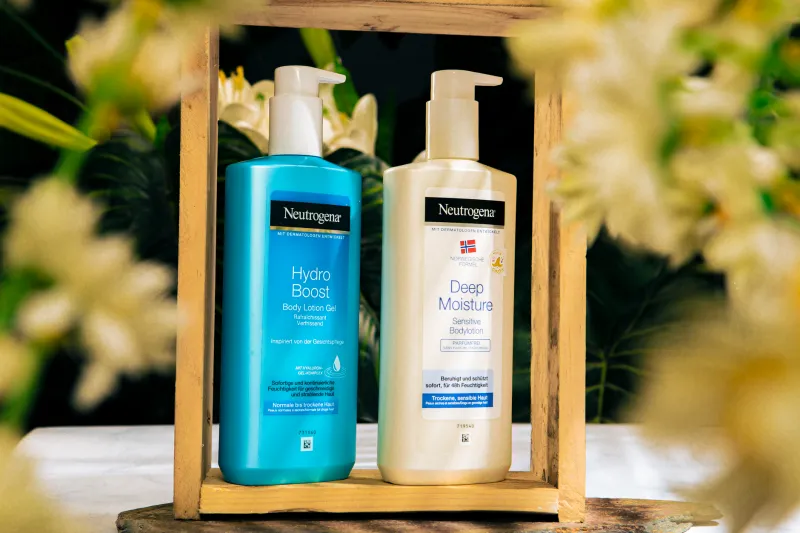
Imagine you're designing a new moisturizer. You've got your formula, your packaging, your influencer gifting list, and your marketing copy. You want to sound credible. You want consumers to trust that your product is safe, effective, and backed by science. You want, in other words, to appear legitimate without necessarily doing the regulatory work that actual legitimacy requires.
So you call up a dermatologist — any dermatologist, doesn't really matter which one — hand them your product, ask if they'd be willing to say it seems fine, and boom: you have a 'dermatologist-approved' product. Congratulations. The sticker is yours. No clinical trial required.
This is, with some variation in the details, roughly how the 'dermatologist-approved' label works in the United States. And it's on everything.
What the Label Actually Means Legally
Let's get the regulatory part out of the way first, because it's both important and deeply unsatisfying.
In the US, the FDA regulates cosmetics under the Federal Food, Drug, and Cosmetic Act — but cosmetics don't require pre-market approval. Unlike drugs, which must demonstrate safety and efficacy before hitting shelves, cosmetics only need to be safe for use under labeled conditions. The FDA does not review or approve cosmetic products before they're sold. This means that any claim a cosmetic brand makes — including 'dermatologist-approved' — falls into a regulatory gray zone governed more by FTC truth-in-advertising rules than any medical standard.
The FTC requires that advertising claims be truthful and substantiated. 'Dermatologist-approved' technically qualifies as substantiated if even one dermatologist has, at some point, indicated approval of the product. That dermatologist could be a friend of the founder. They could have been paid. They could have spent forty-five seconds looking at the ingredient list and said 'yeah, looks okay.' The claim is still technically valid.
There is no minimum number of dermatologists required. There is no standardized testing protocol. There is no third-party verification body checking whether the approval was meaningful. It's a claim, not a certification — and the difference between those two words is doing enormous work here.
The Fine Print Is Where the Story Lives
If you want to understand how 'dermatologist-approved' actually functions in the wild, you have to become a person who reads the fine print. We know. Nobody wants to be that person. We became that person so you don't have to.
On many products carrying this claim, the asterisk leads to language that ranges from mildly clarifying to absolutely spectacular in its meaninglessness. Our favorites from a recent round of label archaeology:
'Based on a survey of dermatologists who recommend moisturizing.' Not this moisturizer. Moisturizing. As a concept.
'Evaluated by dermatologists in an independent study.' The study was commissioned by the brand. The dermatologists were compensated. 'Independent' is doing a lot of heavy lifting in that sentence.
'Dermatologist-tested.' Note: tested is not the same as approved. Your face wash has been tested by a dermatologist the same way your car has been 'tested' by anyone who's ever driven it.
No asterisk at all. Just the claim, floating free of any context, daring you to ask follow-up questions.
The FTC has guidelines about endorsements and testimonials that technically require disclosure of material connections between brands and endorsers — including paid dermatologist relationships. Whether those disclosures are prominent, findable, or written in a font size legible to human eyes is a separate matter entirely.
What Dermatologists Actually Think About This
Here's where it gets interesting. We spoke to people in and around the dermatology space — practitioners, researchers, and at least one person who went to medical school specifically to avoid having to answer questions like these — and the consensus was something between 'resigned' and 'mildly appalled.'
The concern isn't that dermatologists are being deceptive when they lend their name to a product. Many of them genuinely believe the products they endorse are safe and reasonable. The concern is that the label implies a level of rigor that the actual endorsement process rarely involves.
A dermatologist approving a moisturizer is typically evaluating it the way any informed professional might: looking at the ingredients, checking for known irritants or allergens, maybe doing a patch test. This is useful! It is not, however, a clinical trial. It is not a peer-reviewed study. It is an expert opinion, which is valuable but also subject to the same human variables — including financial ones — as any other opinion.
What dermatologists generally recommend, when they're not being asked to endorse anything specific, is looking for products that are fragrance-free, non-comedogenic, and formulated for your skin type. These are boring, unglamorous criteria that require no sticker and no dermatologist's name on the packaging. They are also, not coincidentally, completely free.
The Celebrity Skincare Problem
The 'dermatologist-approved' claim gets particularly interesting — some might say particularly audacious — when it appears on celebrity-founded skincare lines. You know the ones. Launched by someone whose primary qualification is being famous, priced at a tier that implies medical-grade formulation, and inevitably carrying some version of a dermatologist endorsement.
The mechanics here are worth examining. A celebrity skincare brand typically hires a dermatologist as a 'brand consultant' or 'scientific advisor.' This person may have genuine input into the formulation, or they may primarily exist to provide the brand with credibility it can then broadcast across every platform. Their name may appear on the website's 'our team' page in a font size suggesting equal partnership with the founder. Their compensation is disclosed somewhere in the vicinity of nowhere.
This is not a fringe practice. It is standard. It is so standard that the presence of a dermatologist's name on a celebrity skincare brand has become almost meaningless as a signal — not because all dermatologists who work with brands are compromised, but because the structure of the relationship is so rarely transparent that consumers have no way to evaluate what the endorsement actually represents.
So What Should You Actually Look For?
Glad you asked. Here is our extremely unglamorous guide to evaluating skincare credibility without relying on marketing language:
Look at the ingredient list, not the front of the packaging. The front is advertising. The back is (more) honest.
Check if the brand has published any clinical data. Real clinical studies on real products with real participants, run by researchers with no financial stake in the outcome. These exist. They're rare in cosmetics marketing, which is itself informative.
Treat 'dermatologist-approved' like 'all-natural' or 'clean.' Evocative. Legally vague. Not a substitute for reading the label.
Ask your actual dermatologist. If you have one. If you don't, the American Academy of Dermatology website has free resources written by people who went to medical school and are not currently trying to sell you a serum.
And if you're ever genuinely unsure whether a product is right for your skin, the answer is almost certainly not printed on the packaging in a font designed to suggest trustworthiness. It's in the ingredient list, in the clinical literature, or in the slightly uncomfortable but ultimately useful conversation you have with a doctor who is not being paid to agree with you.
The sticker cannot save you. But at least now you know what it's worth.