Your Ring Light Is Doing More Work Than Your Concealer: The Before-and-After Beauty Photo Deception, Investigated
Let's set the scene. You're scrolling at 11 p.m., the blue light doing its thing, and you encounter a before-and-after that stops you cold. The "before" is a woman looking tired, uneven, very human — bad lighting, flat angle, the kind of photo that makes everyone look like they're being interviewed by HR. The "after" is the same woman, apparently transformed by a $32 concealer into someone who has never experienced a poor night's sleep or a stressful Tuesday.
You screenshot it. You add the concealer to your cart. You are now part of the most successful long con in the history of personal care products.
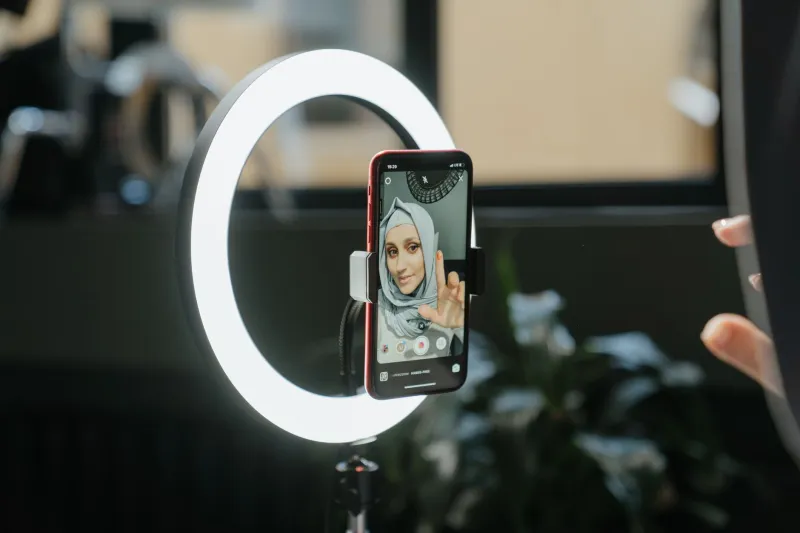
The concealer did not do that. The concealer did some of that. The ring light, the camera angle, the smoothing filter, and the very deliberate decision to take the "before" photo under a single overhead bulb in a bathroom did the rest. And the beauty industry — which funds, distributes, and profits from this content — would very much like you not to think about that too hard.
The Before-and-After Is a Genre, Not a Document
The before-and-after beauty photo has been around since the advent of print advertising, and it has always operated on the same basic principle: make the before look as bad as possible and the after look as good as possible, and let the human brain do the rest.
What's changed in the social media era is the sophistication of the toolkit and the intimacy of the delivery. An ad in a magazine feels like advertising. A tutorial from someone in their bathroom, talking directly to camera, feels like a friend sharing a discovery. The psychological distance collapses. The skepticism goes with it.
We're not saying the people posting these tutorials are being malicious. Many of them genuinely love the products they're promoting. But there is a meaningful difference between "this product looks great in my content" and "this product will look great on your face in your actual life," and that gap is where a lot of beauty marketing quietly lives.
We Tested the Looks Under Real Conditions
We selected five viral makeup transformations from the past year — the kind with millions of views, raving comments, and a product link in the bio. We replicated each look as precisely as possible using the products specified, following the technique demonstrated. Then we photographed the results under three different conditions: ring light with a front-facing camera (the content creator's natural habitat), a well-lit room with natural light (optimistic but achievable), and standard office fluorescent lighting (the great equalizer, the revealer of truths, the environment in which most of us actually spend our days).
The ring light photos: genuinely impressive. Several of them were good enough to post without editing. One of them looked so good that a colleague asked which filter we'd used. We had not used a filter. We had used a ring light, which is basically a filter you buy once and keep forever.
The natural light photos: decent. A couple of looks held up well. One — a heavily contoured, dramatically highlighted situation that had looked sculpted and intentional under the ring light — revealed itself in natural light to be a series of brown stripes and white stripes that had not fully blended, which is a sentence we did not expect to be writing about a tutorial with 4.2 million views.
The fluorescent lighting photos: we are going to be diplomatic here and say that the gap between the tutorial result and the fluorescent result was, for most of the looks, significant. One full-coverage, highly luminized look that had appeared radiant and dimensional under the ring light looked, under the office lights, like a very committed theatrical makeup job. A coworker asked if we had a performance later. We did not have a performance later.
The Editing App Is the Unsung Co-Star
We need to talk about Facetune, Lightroom mobile, and the smoothing tools baked into most phone cameras at this point — because they are doing an enormous amount of work in the beauty content ecosystem and they are almost never disclosed.
The FTC has guidelines about disclosing paid partnerships. There are no equivalent guidelines requiring disclosure of "I smoothed my skin texture in post." There is no asterisk that reads: results achieved with the assistance of a $3.99 monthly subscription and about four minutes of editing. The product gets the credit. The app gets nothing except our continued subscription fees.
We ran our own ring-light photos through a standard smoothing edit — the kind a moderately experienced phone user could do in under five minutes — and compared them to the unedited versions. The difference was substantial enough that we briefly felt bad about our own unedited skin, which is insane, because the edited version was our own face, and we had done the editing, and we knew exactly what had happened, and we still felt bad.
That is how effective this stuff is. Even when you're the one doing it, it works on you.
The Coworker Reaction Study (Informal, Unscientific, Devastating)
In the interest of journalism, we wore one of the viral transformation looks to the office on a Friday — a full, carefully executed version of a tutorial that had genuinely looked incredible under controlled conditions. We told no one in advance. We observed reactions.
Results: two people asked if we had "done something different" in a tone that was politely noncommittal. One person said we looked "really put together," which is lovely but not quite "luminous glass-skin goddess," which is what the tutorial had implied. One person asked if we were going somewhere after work. One person said nothing, which is fine, because most people are not studying your face when they are trying to eat lunch.
Nobody said we looked bad. But nobody said we looked like the after photo either. Because we didn't. We looked like a person wearing makeup in an office, which is a perfectly acceptable thing to look like, and also not what gets four million views.
The Part Where We Admit We'll Keep Watching Anyway
Here's the thing about beauty transformation content: it's genuinely enjoyable to watch. The skill involved in many of these tutorials is real. The products used often are good. The entertainment value is legitimate. We are not here to burn it down.
We are here to suggest that you watch it the same way you watch a cooking show — with appreciation for the craft, awareness of the production value, and the understanding that your kitchen is not a TV set and your Tuesday night pasta is not going to look like that.
Your face, under fluorescent lighting, with a good skincare routine and whatever makeup you actually enjoy wearing, looks like your face. Your face is fine. Your face is, in fact, great.
It just doesn't come with a ring light. And honestly, neither does real life.