Pencil Me In for a Breakdown: The Lip Liner Rabbit Hole Nobody Asked to Fall Down
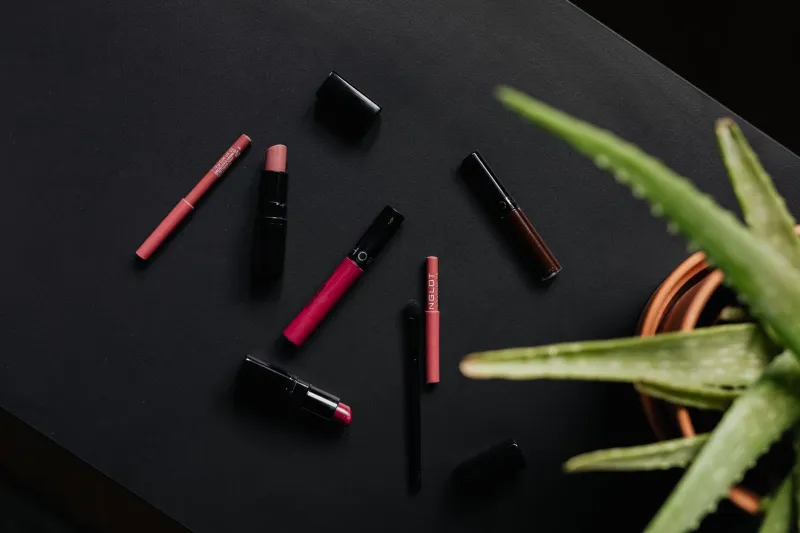
Somewhere in America right now, there is a woman standing in front of a Sephora display wall, holding two lip liners that are, to the naked human eye, the exact same color. One is called "Rosewood." The other is called "Dusty Rose." She is squinting. A sales associate is approaching. This is how it begins.
Lip liner used to be simple. You bought one. Possibly in the wrong shade because the lighting in drugstores has been legally required to be terrible since approximately 1987. You used it until it was a tiny nub, and then you threw it away, or lost it under your bathroom sink where it would fossilize alongside a 2019 mascara and some Q-tips you keep meaning to throw out. That was the whole arrangement. It was fine.
Now? Now we have a problem.
The Numbers Don't Lie (But They Do Embarrass)
Let's talk inventory. We conducted a deeply scientific survey of BeautyFool readers — which is to say, we posted a poll on Instagram and approximately 400 people confessed their sins. The average respondent owned seven lip liners. Seven. The median number they had used in the past 30 days was one. Several people admitted to owning liners still in their original packaging, purchased because they were "part of a set" or because the shade was described as "universally flattering," which, in beauty marketing, is code for "flattering on the model, chaotic on you."
One reader — bless her — submitted a photo of her lip liner drawer. We counted 23 pencils. She described herself as "not really a lip liner person." Reader, we need you to look inward.
The brands are not innocent here. Pull up any major cosmetics line and navigate to their lip liner section. Charlotte Tilbury offers around 19 shades. NYX, bless their budget-friendly hearts, has launched somewhere north of 40. MAC's lip pencil lineup is so extensive it has its own zip code, spiritually speaking. And they are all, every single one of them, slightly different from each other in ways that require either a spectrophotometer or a full spiritual awakening to appreciate.
The Shade-Name-to-Actual-Color Deception Pipeline
Here's where it gets genuinely unhinged. Lip liner shade names have evolved into a form of abstract poetry that has completely decoupled from visual reality. "Whirl." "Soar." "Spice." What do these mean? Who is Whirl for? What is she doing on a Tuesday?
We spent an afternoon — a full afternoon, please acknowledge this sacrifice — attempting to match lip liner shade names to their actual colors without looking at swatches first. "Plum" was straightforward, fine, we'll allow it. "Pillowtalk" turned out to be a muted pink, which tracks, sure. But "Boldly Bare"? "Blushed Umber"? "Mauve-ish"? (That last one is real. We are not making up Mauve-ish. Mauve-ish is a product that exists and costs $22.)
The naming strategy, we have concluded, is intentional chaos. If you cannot identify whether you already own this color from the name alone, you are more likely to buy it. This is not cynicism. This is a business model.
Does Anyone Actually Use All of These
Short answer: no.
Longer answer: also no, but with feelings.
Lip liner, at its core, serves two functions. First, it defines the lip line so your color doesn't bleed into the surrounding territory like a watercolor left in the rain. Second, it acts as a base coat that helps your lipstick or gloss grip and stay put longer. Both of these are legitimate, useful things. Both of these can be accomplished by one liner in your general lip color family.
And yet. And yet we have been convinced — through magazine editorials, TikTok tutorials, and the quiet psychological pressure of a very organized influencer's vanity drawer — that we need a dedicated liner for every gloss in our collection. That our warm-toned nude gloss requires a different pencil than our cool-toned nude gloss, which is different from our sheer berry gloss, which cannot possibly share a liner with our brick-red matte lipstick.
Is this true? We tested it. We lined our lips with a single neutral liner — a perfectly medium rose-brown, the Switzerland of lip liners — and wore it under six different lip products ranging from a sheer pink gloss to a deep plum stain. Results: it worked fine every single time. The lip products looked exactly as they were supposed to look. Nobody stopped us on the street to point out our liner discrepancy. Our lips did not revolt.
The multi-liner gospel, it turns out, may have been written by people who sell lip liners.
The Undertone Upsell: A Study in Manufactured Anxiety
The latest frontier in lip liner proliferation is the undertone conversation, and we have to talk about it. Brands have begun releasing the same shade in "warm" and "cool" versions. Your nude, apparently, is not just a nude. It is a nude with a personality, and you need to know whether your skin's undertones are warm, cool, or neutral before you can be trusted to line your own mouth.
This is a lot. This is a lot to put on a person who just wants to wear a lip color without it migrating to their chin by 11 a.m.
Warm undertones, cool undertones — these matter in foundation. They matter in blush placement. In lip liner? The liner is literally going to be covered by your lip color approximately four seconds after application. The undertone of the pencil is going to be visible for the amount of time it takes you to cap it and reach for your lipstick. We are buying products based on color theory that will be rendered invisible immediately upon use.
We're not saying undertones don't exist. We're saying they may not require a $26 pencil to address.
The One Liner You Actually Need (And the Seven You're Going to Buy Anyway)
Here is the genuinely useful part of this investigation, delivered with full acknowledgment that you are going to ignore it: you need one, maybe two, lip liners. A neutral that works across most of your lip looks. Possibly a second one in a deeper shade if you wear a lot of dark lipstick. That's it. That's the list.
The universal liner exists. It has existed for decades. MAC's "Whirl" became famous for being exactly this. Charlotte Tilbury's "Pillowtalk" built an entire empire on being it. Every brand has a version. You probably own it already, buried under six of its closest relatives.
But will you stop at one? Will any of us stop at one? We will not. Because the wall is very shiny and the names are very evocative and somewhere between "Rosewood" and "Dusty Rose" we will convince ourselves that we have finally, finally found the missing piece of our lip routine.
See you in the liner aisle. We'll be the ones squinting.