Sixty Shades of Beige and Not One of Them Is You: The Foundation Shade-Matching Scam, Exposed
Somewhere in your bathroom right now — maybe in a drawer, maybe in a graveyard of a makeup bag, maybe just sitting on your counter in silent accusation — there is a foundation bottle that is not your color. You know the one. You bought it with confidence. The sales associate held the tester to your jaw and said, "Oh, that's perfect." You believed her. You got home, applied it in natural light, and discovered you look like a Renaissance painting of a person who is unwell.
You are not alone. You are, in fact, part of a vast, quietly devastated community of Americans who collectively own approximately 847 million dollars' worth of foundation in the wrong shade. The beauty industry did not accidentally create this problem. The beauty industry is this problem, wearing a very well-blended contour.
The Illusion of Choice (a.k.a. The 60-Shade Flex)
In 2017, a certain celebrity-fronted brand launched with 40 foundation shades and the internet lost its mind in the best possible way. The message was clear: more shades equals more inclusion equals progress. Beautiful. Genuinely. Except that every other brand on the market immediately panic-launched their own expanded ranges, and suddenly we were drowning in options — not because the formulas improved, not because the undertone categories got smarter, but because 40 shades was a PR moment and everyone wanted one.
Today, it is completely normal to walk into a Sephora, a Ulta, or a department store counter and be confronted with a foundation that comes in 60, sometimes 65, occasionally an unhinged 72 shades. This sounds like a triumph. It is, in practice, a trap.
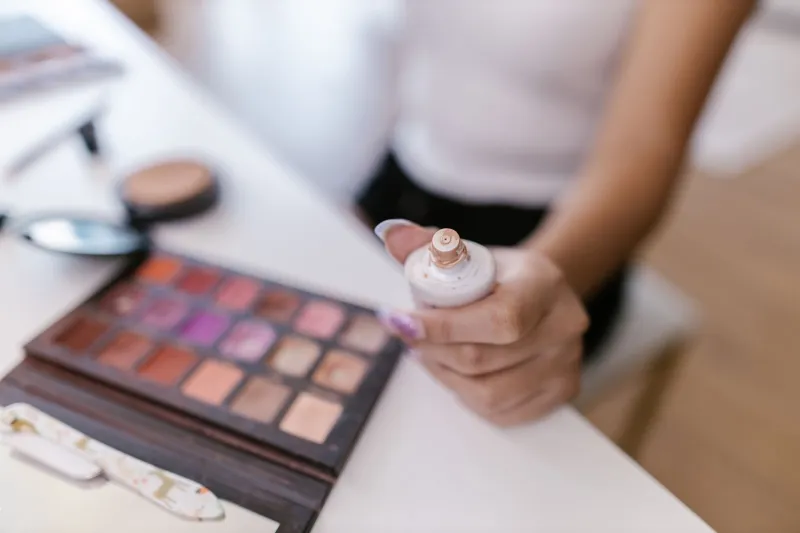
Here's the thing about 60 shades: at least 35 of them are some variation of light-to-medium neutral beige. The range looks comprehensive. It photographs beautifully in a flat-lay. It signals diversity without necessarily delivering it. Meanwhile, the actual spectrum of human skin — particularly deeper skin tones with complex undertones, or very fair skin with strong pink or olive pulls — remains weirdly underserved, while the middle of the range gets 14 nearly identical options that differ by approximately one molecule of pigment.
You're not imagining it. The shade range is a marketing document, not a dermatological one.
The Undertone Mythology That Is Ruining Your Life
Let's talk about undertones, because this is where the scam really gets philosophical.
At some point, the beauty industry decided that all human skin falls into three undertone categories: warm, cool, and neutral. These are presented as established facts, like the three branches of government or the three acts of a movie. They are not. They are a simplification so aggressive it borders on fiction.
Human skin undertones are genuinely complex — you can be warm on your forehead and cool on your cheeks. You can have olive undertones that read as both yellow and green depending on the light. You can be, as many people are, a moving target that defies categorization. None of this is accounted for in the little undertone quiz on a brand's website that asks you whether your veins look blue or green (they look vein-colored, Karen, they look like veins).
The undertone system exists not to help you find your shade. It exists to give you a framework for buying more foundations when the first one doesn't work. "Oh, you went too warm — try this one." That's not a solution. That's a subscription model with extra steps.
Store Lighting: A Special Kind of Evil
If the shade range is the crime and the undertone mythology is the weapon, store lighting is the getaway car.
Beauty retailers — and this is not a conspiracy theory, this is a documented design choice — light their stores in a way that makes every product look better than it will at home. The warm, diffused, slightly golden lighting at a makeup counter is specifically calibrated to minimize contrast, blur edges, and make foundation matches look seamless in a way they absolutely will not replicate in your bathroom, your office, your car, or literally any other environment in which you will exist.
You match your foundation under the equivalent of a candlelit dinner, then wear it in the cold fluorescent reality of a CVS, and suddenly you're a different person. A paler, oranger, or inexplicably grayish person, but a different one.
Some stores have introduced "natural light mirrors" or daylight-spectrum lighting stations, which is lovely. It is also extremely telling that this is presented as a feature rather than the baseline standard that it obviously should be.
The $500 Odyssey (We Did the Math)
Here's how the foundation spiral actually works, financially:
You buy a foundation. It's wrong. You buy another. Also wrong, different way. You watch seventeen YouTube tutorials about undertone matching and buy a third based on a woman whose skin tone you approximate but do not share. You try a sample from Sephora, get three more samples, lose all the samples, then just buy the one you think worked. It doesn't. You try a drugstore option because maybe the problem is that you've been overthinking it. The drugstore option oxidizes on your face by noon and you look like a sweet potato.
At some point, you buy a color-correcting primer because someone told you that's the issue. It is not the issue. You now own a color-correcting primer.
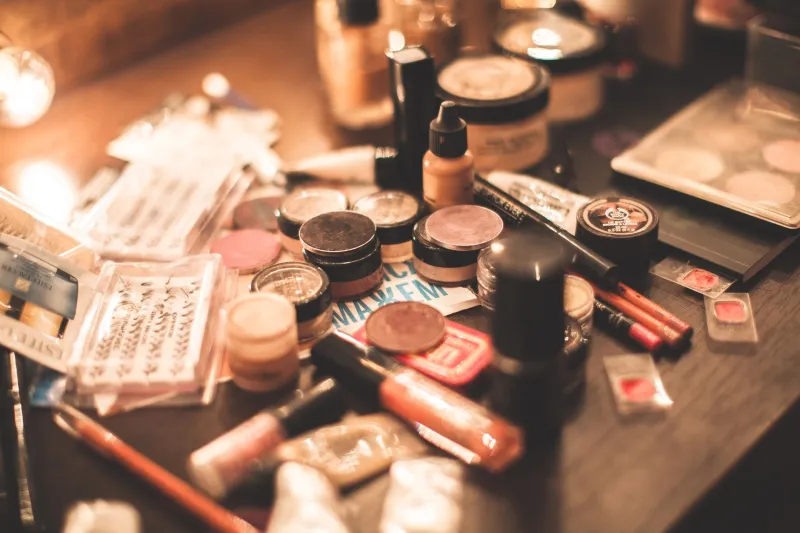
A conservative estimate of the average American woman's foundation graveyard — the half-used, fully wrong, completely regretted bottles — puts the total somewhere between $200 and $600. This is not a rounding error. This is a running tab that the beauty industry is very comfortable with you maintaining.
What Would Actually Help (A Brief, Mostly Hopeless List)
In a just world, foundation shade matching would involve:
- Standardized shade naming across brands, so that "Light 3 Warm" meant the same thing everywhere. (It does not. It means nothing. It is chaos.)
- Honest return policies that don't make you feel like a criminal for returning an opened foundation that was the wrong color because you couldn't know it was the wrong color until you opened it.
- Better sampling systems — real samples, not the swipe-on-your-hand approach that tells you absolutely nothing about how a formula wears on your full face over eight hours.
- Store lighting that reflects reality, which is apparently a radical ask.
Some brands are genuinely trying. Virtual shade-match tools have gotten better. A few companies have invested in real undertone research. There are makeup artists and beauty editors who are doing honest, careful work to help people navigate this.
But the industry as a whole has a significant financial interest in the problem remaining unsolved. A solved problem is a customer who buys one foundation and stops. An unsolved problem is a customer who buys seven.
The Drawer of Shame
We're not here to tell you to stop buying foundation. We're BeautyFool, not BeautyJoyless. Buy the foundation. Chase the perfect match. It's genuinely fun, in a maddening, expensive, occasionally humiliating way.
Just know — when you crack open that seventh bottle and hold it up to your face in the unforgiving light of your bathroom mirror and think, how is this still not right — that you did not fail the system. The system was designed so that you would keep trying.
The foundation industrial complex thanks you for your continued participation. Your shade is probably the next one.