Congratulations, You Now Own Nine Serums and a Mortgage-Sized Skincare Habit
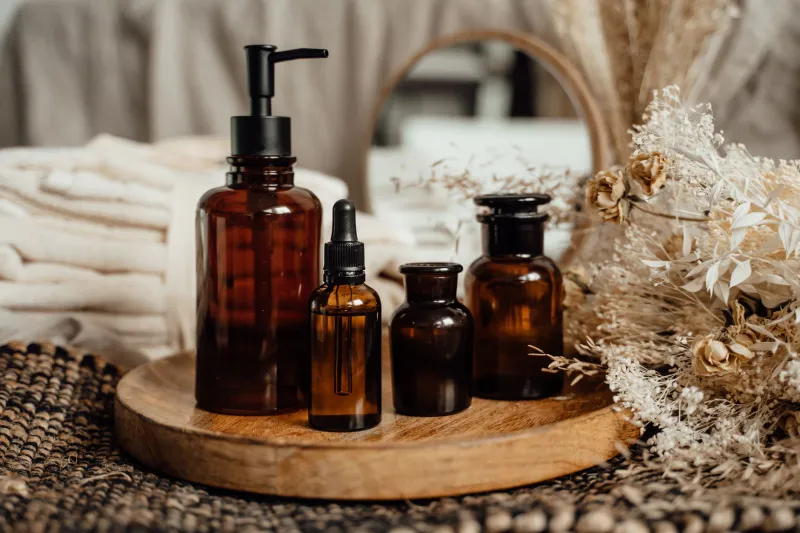
Let me describe your bathroom counter. Go ahead, picture it. There's a Vitamin C serum you apply in the morning because oxidative stress is apparently your personal nemesis. There's a hyaluronic acid serum you layer on top because someone on the internet said your skin is 'thirsty.' There's a niacinamide serum for pores, a retinol serum for texture, a peptide serum for 'firmness,' and something called a 'barrier essence' that you bought during a moment of existential vulnerability at Sephora. You spent, conservatively, $240. Your skin looks roughly the same as it did in 2019.
Welcome to the serum stacking era — the beauty industry's most profitable psychological operation since they convinced us toner was a food group.
How We Got Here (It Was Not an Accident)
For most of human history, people washed their faces with soap, maybe slapped on some moisturizer, and went about their lives. Skin was skin. It did skin things. Then somewhere around 2015, the concept of 'targeted treatment' entered the mainstream beauty conversation, and the industry collectively realized something beautiful: if you could convince consumers that each individual skin concern required its own individual product, you could theoretically sell infinite serums to the same person forever.
It's genuinely elegant, from a business standpoint. A moisturizer is one product. But if you atomize moisturization into 'hydration,' 'plumping,' 'barrier repair,' 'ceramide replenishment,' and 'moisture-lock technology' — suddenly you've got five products, each retailing between $32 and $89, all of which technically do the same thing: put water and lipids on your face.
The 10-step Korean skincare routine arrived in the US around the same time and, stripped of its original cultural context, became the ideological backbone of the serum stacking movement. Not the philosophy — the shopping list.
The Serums That Actually Do Something
Here's the uncomfortable truth that dermatologists will tell you if you corner one at a party: the list of skincare ingredients with robust, peer-reviewed evidence behind them is short. Embarrassingly short, given the size of the industry built on top of it.
Vitamin C (L-ascorbic acid) is real. It's an antioxidant, it does help with brightening and some photoprotection, and there's legitimate science behind it. The catch is that it's notoriously unstable, degrades quickly in light and air, and a lot of Vitamin C serums on the market contain concentrations too low to do much of anything. That $78 bottle with the frosted glass packaging? Check the percentage. If it's not telling you, that's your answer.
Retinoids work. Full stop. Decades of clinical evidence. The reason your retinol serum costs $65 and makes your face peel for three weeks is because it is actually doing something cellular and your skin is staging a protest. Respect the process, moisturize aggressively, and wear sunscreen.
Niacinamide has decent evidence for pore appearance and some brightening. It's also cheap to manufacture, which is why you'll find it in a $12 drugstore product and a $90 boutique serum and the difference is mostly the bottle.
Hyaluronic acid is a humectant. It draws moisture to the skin. It works. It also costs almost nothing to produce, which makes the $55 'molecular weight layering complex hyaluronic serum' situation genuinely hilarious if you think about it for more than thirty seconds.
The Serums That Are Expensive Water
This is where it gets spicy.
A significant portion of the serum market is, to put it diplomatically, vibes-based. Ingredients like 'fermented kelp extract,' 'adaptogenic mushroom complex,' 'blue light defense technology,' and 'quantum peptide activation matrix' exist primarily in the marketing copy. The concentrations of any active ingredient are often so low as to be functionally decorative. You are paying for the idea of the ingredient, the prestige of the brand, and the very nice dropper bottle.
'Essence serums' and 'facial mists' that retail above $40 deserve particular scrutiny. Water — even water with a few dissolved minerals or a splash of rose extract — is still mostly water. Your tap produces it for free. We're not saying don't buy them. We're saying know what you're buying.
The 'microbiome serum' category is also worth a raised eyebrow. The skin microbiome is a real and genuinely interesting area of research. It is also an area of research that is nowhere near mature enough to justify the confident, specific claims being made on packaging right now. 'Supports your skin's natural ecosystem' is doing a lot of work as a sentence.
The Psychology of the Layering Ritual
Here's the part the industry really doesn't want you to think about: serum stacking works as a ritual regardless of whether it works as chemistry. The act of spending fifteen minutes carefully applying products in the correct order, waiting sixty seconds between each layer, patting (never rubbing) your skin into submission — it feels like self-care. It feels like doing something. And humans are deeply, powerfully motivated by the feeling of doing something.
Beauty brands understand this better than most. The 'routine' is not just a product recommendation. It's a subscription service disguised as a wellness practice. Once you're in the routine, removing any single product feels like negligence. What if that was the one that was working? You can't know. You'll never know. Better keep buying it.
This is also why 'skin cycling' went viral — the concept of rotating your actives on a schedule. It's legitimately sensible advice about not over-exfoliating. It was also, almost immediately, used to justify owning more products, because now you need a full roster to rotate through.
What You Actually Need (A Boring, Honest Answer)
A gentle cleanser. A moisturizer with SPF for daytime. A retinoid if you're into that. A targeted active — Vitamin C, niacinamide, whatever your specific concern is — if you want one. That's it. That's the routine that dermatologists recommend. That's the routine that doesn't require a spreadsheet to execute at 7 a.m.
Will you follow this advice? Probably not. Neither will we, honestly. There's something deeply human about the serum shelf, about the small brown bottles lined up like a tiny apothecary of hope. The ritual is real even if some of the chemistry is fictional.
Just maybe — maybe — you don't need the barrier essence, the peptide activator, and the 'quantum glow complex' in the same routine. Pick your battles. Your face has a finite surface area. Your wallet has a finite depth.
Somewhere, a brand executive is reading this and already workshopping the 'anti-serum serum' launch. A single product that does everything. Minimalism, reimagined. Only $110. Limited edition frosted glass.
We'll probably review it.