Sorry, That Product Is 'In-Store Only': How Luxury Beauty Brands Turned Inconvenience Into a Personality
It starts innocently enough. You're doing your routine 11 p.m. doomscroll when a sponsored post stops you cold. A serum. The serum. The one that promises to reverse time, eliminate texture, and make your skin look like it was personally buffed by a Swiss dermatologist who charges $900 an hour and only sees clients by referral. You click through. You find the product page. You reach for your credit card.
And then you see it: Available exclusively in select retail locations.
Those four words. That quiet, devastating sentence. The velvet rope of the beauty world, stretched directly across your checkout cart.
Welcome to luxury beauty's most lucrative and least discussed marketing strategy: making you feel like the problem.
The Architecture of 'You Can't Have This'
Here's how the game works. A prestige brand — let's call them something vague and French-sounding, because they always are — launches a product with significant fanfare. There are influencer gifting campaigns. There are glossy magazine placements. There is a waitlist, because of course there is a waitlist. The waitlist has a waitlist.
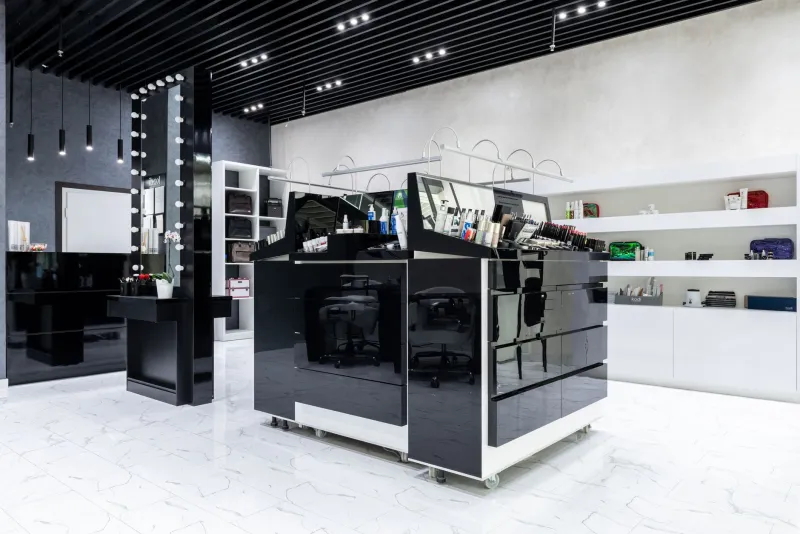
The product is technically available for purchase. Technically. If you happen to live within driving distance of one of eleven flagship locations. If you're willing to schedule what the brand calls a 'personalized discovery session,' which is a forty-five-minute appointment during which a very well-moisturized sales associate explains to you why you also need the $280 eye cream that pairs with the serum you came in for.
This is not an accident. This is architecture.
Luxury beauty brands have spent decades perfecting what industry insiders call 'controlled distribution,' and what the rest of us call 'I drove forty minutes to a mall and they were out of stock.' The logic, when brands deign to explain it, is that premium products require 'guided purchasing experiences.' That the consumer deserves 'education.' That some products are simply 'too sophisticated' for the impersonal transactional nature of e-commerce.
What they mean is: scarcity is free advertising, and inconvenience is a status signal.
The PR Explanation (Translated for Humans)
We reached out to several luxury beauty brands for comment on their limited online availability policies. The responses, while polished to a mirror shine, were remarkably consistent in what they carefully avoided saying.
One brand's communications team explained that their 'immersive retail model prioritizes the integrity of the customer journey.' Another cited 'formulation complexity' as a reason certain products require 'professional context before purchase.' A third — and this is our personal favorite — said their in-store exclusives exist to 'honor the relationship between client and brand.'
Translated: they want you in the store, surrounded by product, talking to a commissioned salesperson, for as long as possible.
None of them mentioned that 'in-store only' products also conveniently prevent price comparison, discourage returns, and create a paper trail that's much harder for resellers and deal aggregators to exploit. None of them mentioned that 'limited availability' generates the kind of organic social buzz that no paid media budget can reliably replicate. None of them said the quiet part out loud, which is that the most powerful thing a luxury brand can do is make you feel like you haven't quite earned the right to buy something yet.
What This Actually Costs You (Beyond the Serum)
Let's talk numbers, because BeautyFool is nothing if not willing to do the math nobody asked for.
The average 'exclusive' luxury beauty product retails somewhere between $120 and $400. Getting to a flagship location — assuming you don't live in New York, Los Angeles, Chicago, or a handful of other cities with the right zip codes — may involve gas, parking, time off work, or a flight, depending on how deep the obsession goes. (Don't laugh. People fly to Paris for Chanel skincare. We have the receipts.)
But the real cost isn't financial. It's psychological. It's the low-grade, persistent feeling that you are somehow adjacent to luxury rather than inside it. That you're pressing your nose against the glass of a world that keeps moving the glass.
Luxury brands are extraordinarily good at making consumers feel like the exclusivity is a gift rather than a gate. The waitlist isn't a delay — it's proof you have taste. The in-store requirement isn't an inconvenience — it's an experience. The $380 moisturizer isn't overpriced — it's misunderstood by people who haven't tried it.
This is what we mean when we say the velvet rope is psychological. You don't just want the product anymore. You want to be the kind of person who can casually access the product. The brand has successfully sold you an identity aspiration wrapped in a jar of ceramides.
The Democratization Lie
Here's the twist that makes this whole thing genuinely interesting rather than just annoying: most of these brands also have an extensive range of products that are available online, at Sephora, at Ulta, at department store counters across America. They're not actually inaccessible. They just have a velvet rope inside their own product line.
The entry-level stuff? Available everywhere. The hero serum that went viral? Click and collect. But the real stuff — the stuff the aestheticians whisper about, the stuff that comes in a matte black box with no logo because the logo is beneath the logo — that requires a pilgrimage.
This tiered exclusivity is a masterclass in aspirational marketing. It keeps consumers on a ladder with no visible top rung. You buy the accessible product. You love it. You hear about the better version that's harder to get. You want that. You get it, eventually. You hear about the version that's only available to clients who've spent over $2,000 in a single calendar year. And on it goes, until you're deep in a 'loyalty program' that has somehow convinced you that spending more money is a privilege you've earned.
How to Play the Game Without Losing Your Mind (or Your Rent Money)
We're not here to tell you luxury beauty is worthless. Some of it is genuinely excellent. Some of it is chemically identical to products that cost a fifth of the price, but that's a different investigation for a different Tuesday.
What we are here to tell you is that 'in-store only' is a choice a brand makes, not a law of physics. That a waitlist is a marketing tool, not a quality guarantee. That the friction between you and a product is entirely manufactured, and you are allowed to notice that.
If you love a brand and the in-store experience genuinely delights you, wonderful. Go. Enjoy the complimentary hand massage. Let someone apply a serum to the back of your hand while describing its 'olfactory journey.' You've earned it.
But if you're sitting at your laptop at midnight, frustrated that a moisturizer requires a field trip to complete a purchase, it's worth asking who that inconvenience actually serves.
Spoiler: it is not you.
The velvet rope has always been about making the people outside it feel like they're the problem. In luxury retail, in nightclubs, and apparently now in skincare aisles, the rope exists to manufacture desire — not to protect quality.
The serum will still be there. The store will still be open. And the brand will still be waiting, warmly, patiently, to make you feel just slightly less-than until you walk through the door.
That's the whole trick. Now you know it.