Confessions of a Mascara Skeptic: We Tested a $68 Tube Against a $9 Dupe and the Results Are Unhinged
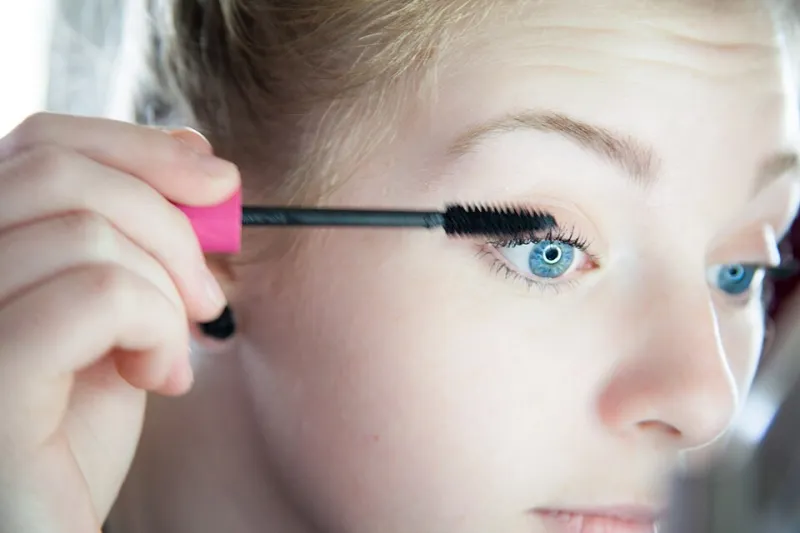
Photo: franchise opportunities, CC BY-SA 2.0, via Wikimedia Commons
Let's establish something upfront: mascara is, at its most fundamental level, pigmented goop on a tiny brush. It has been pigmented goop on a tiny brush since the 1800s when women were literally mixing coal dust with Vaseline and calling it glamour. So when a luxury brand slides a sleek tube across the Sephora counter and asks you to hand over sixty-eight American dollars for the privilege of painting that goop onto your eyelashes, you are well within your rights to ask: why, exactly?
We asked. Nobody loved the answer.
The Setup: How We Actually Did This
Over three weeks, the BeautyFool testing panel — four editors, one very patient photographer, and a magnifying lens we borrowed from someone's grandfather — put fourteen mascaras through their paces. We tested across five categories: initial application, volume, length, smudge resistance after eight hours, and what we scientifically call the "2 PM Raccoon Factor."
The high-end contenders included a $68 French pharmacy darling with a name that sounds like a small coastal village, a $54 department store staple that's been in American makeup bags since the Clinton administration, and a $49 "lash serum-infused" newcomer that promised to simultaneously lengthen, volumize, curl, and apparently solve your attachment issues.
On the drugstore side, we pulled in a $9 CVS classic that your mom swears by, an $11 Target exclusive with suspiciously good Amazon reviews, and a $13 Walgreens find that a Reddit thread described as "the mascara the beauty industry doesn't want you to know about," which is exactly the kind of unhinged energy we respect.
What's Actually Inside That Fancy Tube?
Here's where it gets genuinely interesting, and by interesting we mean slightly infuriating. Cosmetic chemists — actual scientists who formulate these products — will tell you that the core ingredients in any mascara are remarkably consistent regardless of price point. You're looking at waxes (beeswax, carnauba wax, candelilla wax), film-forming polymers, pigments (almost always carbon black or iron oxides), and preservatives. The ratios shift. The additional actives vary. But the skeleton? Largely the same across the aisle.
What you are paying for at the luxury tier, in order of actual impact: the brush design, the brand's research and development costs, the packaging, the marketing budget, the celebrity face of the campaign, the rent on the Sephora counter, and then — somewhere further down the list — any genuinely novel ingredient.
One of our editors held up the ingredient lists of the $68 French tube and the $9 CVS staple side by side and said, out loud, to no one in particular: "These are basically the same document." It was a lot.
The Results, Ranked by How Betrayed We Felt
Length: The $11 Target mascara — a fiber-formula wand with a comb-style brush — outperformed two of the three luxury options in our length test. Under the magnifying lens, the fibers adhered cleanly and created measurably longer-looking lashes. The $68 French tube produced beautiful, natural-looking length that was genuinely lovely and genuinely indistinguishable from what the $9 option also produced.
Volume: This one was closer. The $54 department store veteran delivered exceptional volume with its oversized, densely-packed brush — and credit where it's due, the brush design here is doing real architectural work. The $13 Walgreens find matched it more closely than anyone expected, though it required two coats where the luxury option needed one.
Smudge Resistance: The $49 "lash serum" mascara transferred onto our testers' under-eyes by noon. Sixty-eight dollars of French sophistication. Transferred. By noon. Meanwhile, the $9 drugstore classic — the one your mom uses, the one that's been sitting in a bin at CVS for forty years — made it to 6 PM without incident on three out of four testers. We don't make the rules.
The 2 PM Raccoon Factor: The $11 Target mascara won this category outright. Zero smudging. Incredible staying power. Cost less than a Starbucks order.
Real Talk From Real People
We also surveyed 200 mascara users across the US — a mix of drugstore devotees and luxury loyalists — and the results were illuminating. When shown photographs of lashes (without being told which product was used), participants correctly identified the "expensive-looking" lash look only 54% of the time. That's essentially a coin flip. That's chance. That's the beauty industry's worst nightmare dressed up as a statistics lesson.
One participant, a 34-year-old from Austin who described herself as a "recovering Sephora addict," said it best: "I spent years buying expensive mascara because I thought I could tell the difference. Then I ran out during the pandemic and used my sister's drugstore one and my coworkers told me my lashes looked amazing. I've never emotionally recovered."
Same, honestly.
So Should You Ever Buy Expensive Mascara?
Here's the part where we get nuanced, because we're professionals. There are legitimate reasons to splurge. If you have extremely sensitive eyes, some luxury formulas do invest more in hypoallergenic testing and gentler preservative systems. If a specific brush design genuinely works better for your lash shape — and brush geometry is real and it matters — then pay for the brush. If a product brings you joy in a "this is a little treat" kind of way and the price doesn't hurt your budget, buy the fancy thing. Beauty is also emotional.
But if you are buying a $68 mascara because you genuinely believe it will make your lashes look dramatically, measurably, photographably better than a $9 alternative? We have some gently devastating news, and it comes in a magnifying lens.
Our Actual Recommendations
- Best Overall (Drugstore): The $11 Target fiber mascara. Genuinely impressive. Buy two.
- Best Smudge Resistance (Drugstore): The $9 CVS classic. Your mom was right. She's always right.
- Best Luxury Option That Actually Earns It: The $54 department store veteran — the brush design justifies some of the premium, and the one-coat volume is real.
- Most Overhyped: The $49 lash serum mascara. It transferred. We're still grieving.
The beauty industry is built, in part, on the beautiful lie that expensive means better. Sometimes it does. In the mascara aisle, more often than not, it just means a fancier box and a more emotionally compelling Instagram ad. We're not mad. We're just going to keep our $59 and spend it on something that actually changes our lives.
Like more mascara. From Target.